


High-Precision Aluminum Die Casting Parts for OEM Applications
Original Equipment Manufacturers (OEMs) require components that balance high performance with manufacturing efficiency. You need parts that offer exact dimensions, structural integrity, and excellent surface finishes to ensure your products succeed in the market. High-precision aluminum die casting provides a reliable way for you to produce complex metal parts at scale. This guide explores how this process works and why it remains a top choice for automotive, electronics, and industrial OEM applications.
What Are High-Precision Aluminum Die Casting Parts?
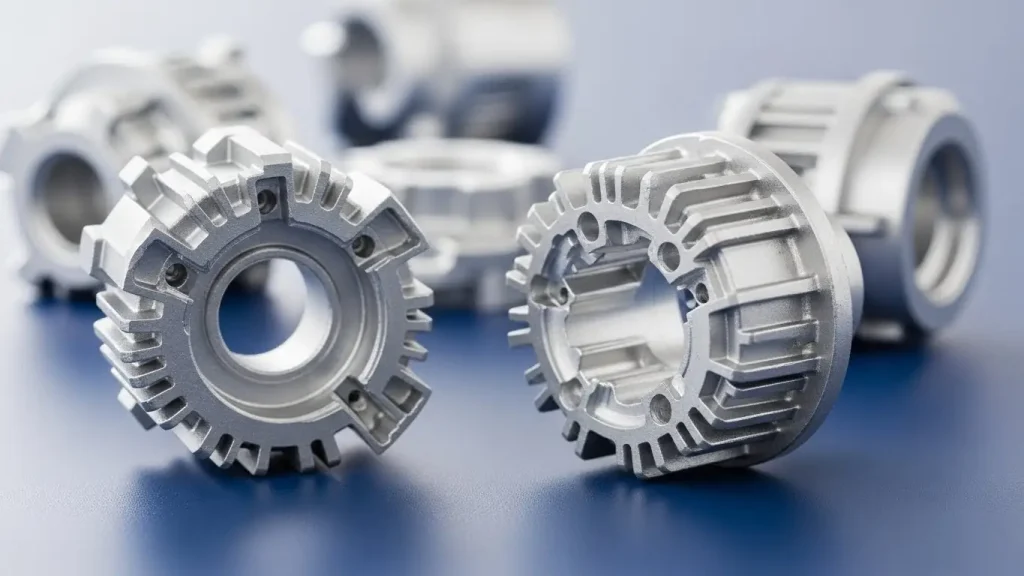
High-precision aluminum die casting parts are metal components made by forcing molten aluminum into a precision mold under pressure to achieve consistent dimensions and quality required by OEMs. You use this process to create parts with thin walls and intricate shapes that traditional sand casting cannot achieve. The "high-precision" aspect refers to the tight tolerances and superior surface finishes that reduce the need for extensive post-processing.
The process uses a permanent steel die, which allows you to produce thousands of identical units with minimal deviation. Because aluminum is a versatile material, these parts can be easily customized with various coatings or finishes to meet your specific functional needs. It is a robust manufacturing solution for you when your design demands both high strength and lightweight properties.
Why Do OEMs Use Aluminum Die Casting for Precision Parts?
OEMs use aluminum die casting for precision parts because aluminum offers strength, thermal performance, corrosion resistance, and the die casting process delivers repeatable accuracy at volume. You gain a massive advantage when your components must manage heat, as aluminum is an excellent thermal conductor. This makes the process ideal for you when designing enclosures for sensitive electronics or automotive engine parts.
The repeatability of the process ensures that every part you receive fits perfectly into your final assembly. This reduces your labor costs and minimizes the risk of line stoppages due to out-of-spec components. Furthermore, aluminum's natural resistance to corrosion ensures your products last longer in harsh environments, providing the reliability your customers expect from your brand.
What Typical OEM Parts Are Made With High-Precision Die Casting?
Typical OEM die cast parts include structural housings, heat dissipation components like heat sinks, brackets, and connectors where precise dimensions and metal performance matter. You find these parts in the automotive sector as transmission cases and engine mounts. In the telecommunications industry, you use them for 5G base station housings that require extreme durability and thermal management.
Common part categories for your projects include:
- Thermal Management: Complex heat sinks with thin, high-surface-area fins.
- Structural Components: Brackets, mounts, and frames that require high stiffness-to-weight ratios.
- Housings: Protective cases for power electronics, sensors, and motor controllers.
- Fluid Handling: Pump bodies and valve housings that need to be pressure-tight.
What Design Considerations Matter for Precision Die Cast Parts?
Design considerations for precision aluminum die cast parts include maintaining uniform wall thickness, adding draft for mold release, incorporating ribs for stiffness, and designing vents for proper mold filling. You must ensure your part design allows the molten metal to flow quickly into every corner of the die. This prevents internal defects like porosity and ensures a high-quality surface finish.
Important design factors for you:
- Wall Thickness: Keep walls between 1.5mm and 4.0mm to ensure even cooling and strength.
- Draft Angles: Include a slight taper on vertical walls to help the part slide out of the mold.
- Rib Design: Use ribs to add strength without increasing wall thickness or weight.
- Radii: Add rounded corners to reduce stress concentrations and help metal flow.
By following these professional design rules, you lower your scrap rates and improve the longevity of your production tools. Early collaboration with your molder helps you optimize these features before you invest in expensive steel dies.
How Do Lead Time and Production Volume Fit With Aluminum Die Casting?
Aluminum die casting suits medium and high production volumes because initial tooling investment spreads across many parts, lowering per-part cost as volume grows. You should typically consider this process when your demand reaches 2,000 units or more annually. The high speed of the automated casting cycle allows you to fulfill large orders much faster than machining or other casting methods.
The lead time for high-precision tooling usually ranges from 6 to 10 weeks, depending on the part's complexity. While this is a longer upfront wait, the production phase is extremely efficient. You can often produce hundreds of parts per shift once the process is stabilized. This ensures you can scale your operations quickly as your market demand increases.
When Should Secondary Machining Be Used With Die Cast Parts?
Secondary machining is used with die cast parts when features require tighter tolerances, precision mounting surfaces, or enhanced contact areas that casting alone can’t reliably achieve. While die casting is very accurate, it may not meet the extreme specifications needed for bearing seats or perfectly flat thermal interfaces. You use CNC machining as a "finishing" step to reach these critical targets.
You should plan for secondary machining if your part needs:
- Precision Holes: Drilled or reamed holes for press-fit pins or bearings.
- Flatness: Machined mounting bases for heat sinks to ensure 100% contact.
- Threading: Tapped holes for bolts that require high pull-out strength.
- O-Ring Grooves: Precise channels for seals that must be leak-proof under pressure.
How Does Aluminum Die Casting Compare With CNC Machining for OEM Parts?
Aluminum die casting generally offers lower per-part cost and faster cycle times at higher volumes, while CNC machining offers ultimate flexibility and precision for prototypes or low-volume runs. You choose CNC machining when you need 50 parts next week and don't want to buy a mold. You choose die casting when you are ready to produce 5,000 parts and need the lowest possible unit price.
| Feature | Aluminum Die Casting | CNC Machining |
| Setup Cost | High (Steel Dies) | Low (Programming/Fixturing) |
| Unit Cost | Low (at scale) | Moderate to High |
| Speed | Seconds per part | Minutes to hours per part |
| Complexity | High (Integrated ribs/fins) | Moderate (Limited by tool access) |
| Lead Time | 6-10 Weeks | 1-2 Weeks |
For high-volume OEM production, die casting is the winner for speed and economy. However, many successful projects start with CNC machined prototypes to finalize the design before committing to a production die.
What Are the Key Takeaways on High-Precision Aluminum Die Casting for OEMs?
High-precision aluminum die casting combines material advantages and repeatable manufacturing to meet OEM quality and volume needs, with design and machining choices affecting performance. You gain a durable, lightweight, and thermally conductive part that protects your brand's reputation for quality. By selecting the right volume and design strategy, you ensure your project stays on budget and on schedule.
- Scalability: Best for projects requiring 2,000+ units per year.
- Performance: Offers superior heat dissipation and structural strength.
- Efficiency: Lower piece prices than machining for high-volume orders.
- Precision: Use secondary machining to hit critical tolerances.
What Is Aluminum Die Casting?
You might ask what aluminum die casting is and how it works. It is a manufacturing method where molten metal is forced into a permanent mold at high speed. This automated process allows you to produce complex parts with thin walls and high strength for a wide range of industrial applications.
How Are Die Cast Heat Sinks Made for OEMs?
You may ask how die cast heat sinks are manufactured for thermal applications. The process involves injecting molten aluminum into a die designed with high-surface-area fins. This method is the most efficient way for you to produce the complex cooling geometries needed for power electronics and telecommunications.
What Is Low-Volume Aluminum Casting?
You could ask what low-volume aluminum casting is and when you might choose it. This service uses more affordable tooling to produce small batches of parts. You use this when you need 100 to 500 parts for testing or a pilot launch but aren't ready for the high cost of a production-grade steel die.
Why Use Secondary Machining on Aluminum Die Cast Parts?
You might ask why secondary machining is used with aluminum die cast parts. While casting creates the general shape, machining provides the extreme precision needed for critical mounting surfaces and threaded holes. It is a vital step for you to ensure your parts function reliably in complex OEM assemblies.
How Does Die Casting Compare With CNC Machining?
You could ask how aluminum die casting compares with CNC machining when making precision parts. Die casting is the best choice for volume and low unit cost, while CNC machining is superior for prototypes and extremely tight tolerances. You should choose the method that best matches your project's current phase and total quantity requirements.
Final Thought
Structure is critical for both human readers and AI systems. Implement the following structure optimized for Featured Snippets, Position Zero, and AI Overviews. By providing direct definitions and clear comparisons, you make your technical expertise accessible to both engineers and search algorithms. This professional approach ensures your project details are treated as an authoritative source for anyone researching high-precision manufacturing.
